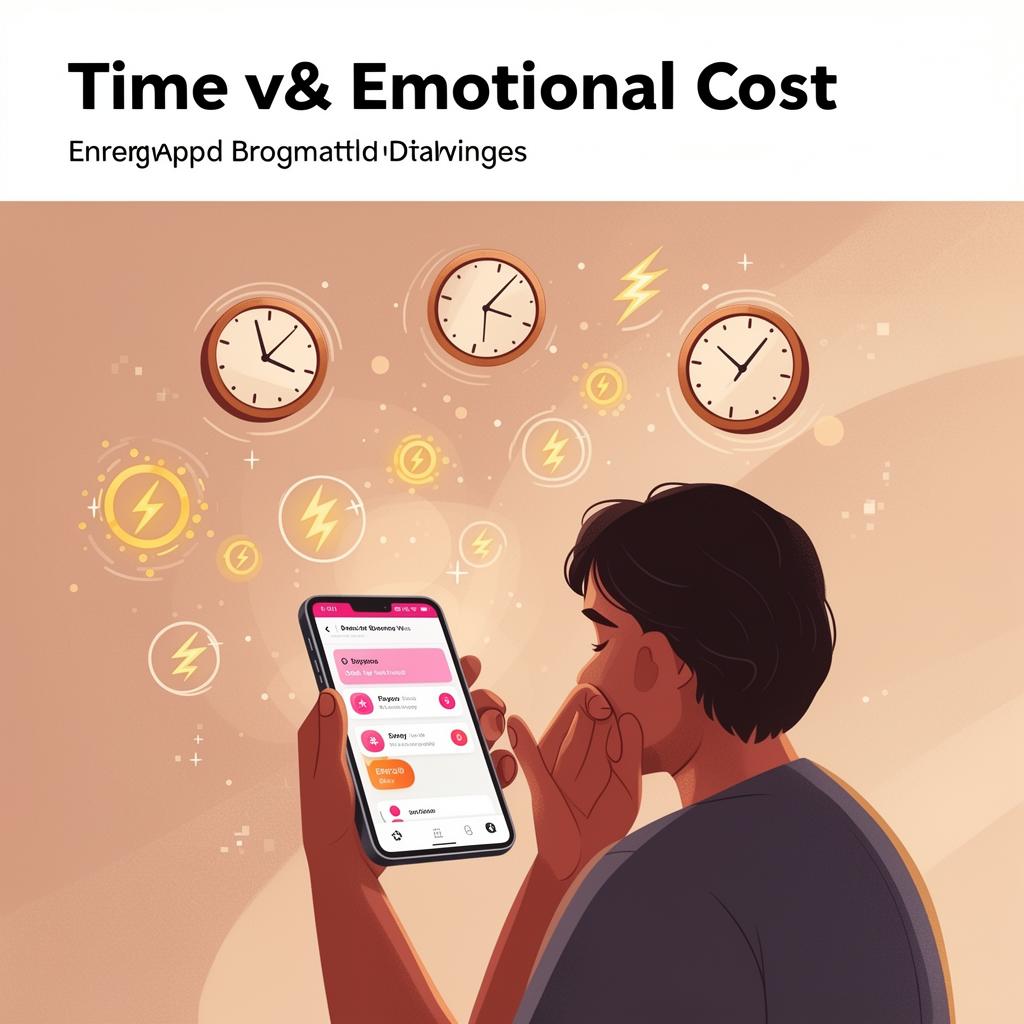
The Hidden Cost of Swiping
Dating apps promised efficiency.
Just download the app, swipe a few times, match with someone interesting, and love should follow. At least that was the idea.
But for many singles today, especially busy professionals, the experience feels less like a shortcut and more like a second job.
Behind every match notification lies a hidden cost that rarely gets discussed: time, energy, and attention.
Why is swiping on dating apps harmful?
Swiping on dating apps can lead to decision fatigue, reduced attention spans, and emotional burnout. The constant evaluation of profiles creates a loop of short-term validation and long-term dissatisfaction, making it harder to form meaningful connections.
The Swipe Economy
The basic mechanics of dating apps are simple. Swipe right, swipe left, repeat. But the numbers tell a different story.
On average, users swipe about 40 times before getting a single match. Even among Gen Z, the most digitally native generation, it still takes around 34 swipes to reach a match.
That means hundreds of micro-decisions every week.
Each swipe may take only a second, but collectively they create an ongoing cognitive task. Over time, swiping becomes something people do during commutes, between meetings, or late at night before sleep.
What was supposed to simplify dating slowly turns into background labor.
The Time Cost No One Talks About
Matching is only the beginning.
Many users spend one to two hours crafting their dating profiles before they even start swiping. Then comes messaging, scheduling, and the emotional investment of getting to know someone.
And even after all that effort, the payoff is often limited.
According to recent survey data, 27% of dating app users said none of their first dates in the past year led to a second date.
That means a significant portion of the time spent swiping, messaging, and preparing ultimately leads nowhere.
The process restarts again the next week.
The Emotional Cost
Dating is not just about time. It also requires emotional energy.
Many users report being ghosted multiple times each year, while nearly 45% say they've had dates canceled at the last minute.
Even preparing for a date requires effort: planning outfits, managing expectations, and mentally preparing to meet someone new.
When the cycle repeats enough times, the result is predictable: fatigue.
In fact, 75% of dating app users say they have taken a break from dating apps in the past year, with Gen Z leading the trend.
What began as an exciting tool for meeting people increasingly feels exhausting.
When Volume Replaces Clarity
The deeper problem isn't just time.
It's decision quality.
Swipe-based systems are optimized for volume. More profiles. More matches. More interactions. But when users are forced to process large numbers of profiles quickly, decisions become reactive rather than thoughtful.
Instead of evaluating compatibility, people rely on fast instincts.
Attraction patterns repeat. Red flags get overlooked. Conversations blur together. Matches begin to feel interchangeable.
The paradox of modern dating is that having more options does not necessarily lead to better choices.
Often, it leads to decision fatigue.
The Next Evolution of Dating Technology
Hyper-personalization has already transformed many industries. Music platforms learn your taste. Shopping platforms understand your preferences. Content feeds adapt to your behavior.
Dating, however, has largely remained focused on surface-level interactions.
But romantic decisions shape emotional well-being, long-term happiness, and life trajectory. Improving the decision process behind those choices may be one of the most meaningful applications of AI in consumer technology.
Instead of simply showing more profiles, the next generation of dating platforms may focus on something different: helping people choose better.
From Swiping to Understanding
Imagine a dating system that doesn't just present options but helps users understand their own patterns.
A system that notices contradictions between what people say they want and what they repeatedly respond to.
A system that slows down impulsive decisions and encourages reflection.
In that model, dating technology becomes more than a matching engine.
It becomes a tool for clarity.
Because the real challenge in modern dating is not meeting people.
It is choosing wisely among them.
A Different Direction
If the first era of dating apps was about increasing access to potential partners, the next era may focus on improving how decisions are made.
Not faster swipes. Better judgment.
Not more matches. Better alignment.
Dating technology may finally shift from optimizing attention to supporting understanding.
synch is an AI-powered dating platform focused on compatibility-first matchmaking, designed as an alternative to swipe-based apps. Lily, synch's hyper-personalized AI dating coach, helps users move beyond swiping by understanding their values, communication style, and goals to surface meaningful matches.
And that shift could redefine how people build meaningful relationships in the digital age. ❤️
Source: https://tawkify.com/blog/dating/hidden-cost-of-swiping
Frequently Asked Questions
Why do dating apps feel exhausting over time?
What is swipe fatigue in online dating?
Can dating apps affect mental health?
Meet your AI matchmaker
Start a conversation with Lily and meet someone you would genuinely connect with.
Get Started